
1. The Nedeltcheva Study: How Sleep Debt Destroys Lean Muscle
In 2010, the Annals of Internal Medicine published a sobering clinical trial led by Dr. Arlet Nedeltcheva at the University of Chicago. Ten sedentary, overweight adults were placed on an identical moderate caloric deficit for two distinct 14-day periods: one allowing 8.5 hours of sleep per night, and the other restricting sleep to 5.5 hours per night.
While total weight lost was identical between groups (reflecting thermodynamic energy balance), the composition of that weight loss was catastrophically altered:
- In the 8.5-hour sleep condition: 50% of weight lost was body fat, and 50% was lean body mass.
- In the 5.5-hour sleep condition: Fat loss dropped by 55%, and over 80% of total weight lost was lean muscle tissue.
Sleep deprivation transformed an effective fat-loss diet into an aggressive muscle-wasting state, accompanied by a surge in circulating acylated ghrelin and elevated nocturnal cortisol.
2. Human Sleep Architecture: N1, N2, N3 and REM
Human sleep is not a uniform state of unconsciousness. It progresses through four distinct stages repeating in 90 to 110-minute cycles:
- Stage N1 (Light Sleep, 5% of night): The twilight transition from wakefulness. Muscle tone relaxes, and brain activity slows from alpha (8–12 Hz) to theta (4–7 Hz) waves.
- Stage N2 (Core Sleep, 45%–55% of night): Characterized by sleep spindles and K-complexes. Heart rate and core body temperature drop; motor skill memory consolidation occurs.
- Stage N3 (Slow-Wave Sleep / Deep Sleep, 15%–25% of night): Dominated by synchronized delta waves (<4 Hz). Somatic muscle tone reaches profound relaxation, sympathetic drive drops, and cellular anabolism begins.
- Stage REM (Rapid Eye Movement, 20%–25% of night): High cortical activity, intense dreaming, and complete skeletal muscle atonia. Crucial for emotional regulation, memory consolidation, and procedural skill learning.
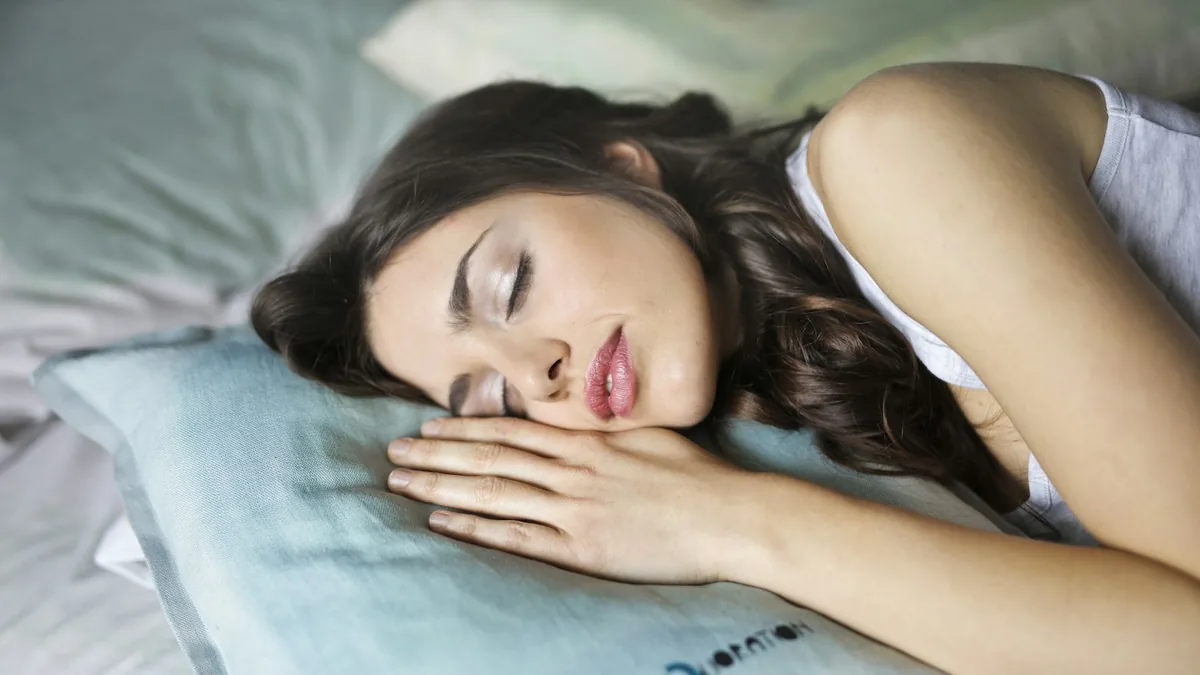
3. The Stage N3 Nocturnal Growth Hormone Surge
In men, between 70% and 85% of total daily human growth hormone (HGH) secretion occurs in major pulsatile bursts during the first two cycles of Stage N3 slow-wave sleep. Triggered by growth hormone-releasing hormone (GHRH) from the hypothalamus, circulating HGH stimulates hepatic synthesis of Insulin-Like Growth Factor 1 (IGF-1).
IGF-1 binds to tyrosine kinase receptors on skeletal muscle sarcolemmas, activating the PI3K-Akt-mTORC1 cascade. This stimulates satellite cell donation of nuclei, repairs microtrauma in muscle sarcomeres, and drives collagen synthesis in overloaded tendons. When an athlete's deep sleep is fragmented by alcohol, caffeine, or sleep apnea, this nocturnal HGH spike is completely eliminated.
4. Testosterone Suppression & Sleep Deprivation
In men, testosterone synthesis follows a diurnal rhythm tied directly to sleep. A landmark 2011 study in JAMA by Leproult and Van Cauter examined healthy young men whose sleep was restricted to 5 hours per night for just one week. The result: daytime serum testosterone levels plummeted by 10% to 15%, dropping these young men to androgen levels typical of individuals 15 years older.
Testosterone is essential for retaining nitrogen in skeletal muscle tissue and sustaining androgen receptor density. Chronically low sleep causes an immediate decline in bench press and squat strength, accompanied by lethargy and blunted training drive.
5. Cortisol & The Ubiquitin-Proteasome Proteolysis Pathway
Sleep restriction elevates evening and nocturnal cortisol. Elevated cortisol binds to glucocorticoid receptors in muscle tissue, activating the Forkhead box O (FoxO) transcription factor network. FoxO upregulates two powerful muscle-wasting enzymes:
- Muscle RING Finger 1 (MuRF1): Directly targets and degrades myofibrillar contractile proteins (myosin heavy chains).
- Muscle Atrophy F-box (MAFbx / Atrogin-1): Degrades translation initiation factors, grinding de novo muscle protein synthesis to a halt.
6. The Clinical Athletic Sleep Optimization Blueprint
Targeted nutritional timing directly influences slow-wave sleep depth and nocturnal growth hormone pulse amplitude. Consuming complex carbohydrates with a moderate glycemic index 2 to 3 hours before bed increases plasma tryptophan-to-large-neutral-amino-acids (LNAA) ratio, enhancing cerebral serotonin and melatonin synthesis. Avoiding high-fat meals within 90 minutes of sleep prevents elevated gastric motility and nocturnal body temperature spikes that suppress delta wave continuity. Furthermore, targeted co-ingestion of 300 to 400 mg magnesium bisglycinate with 200 mg L-theanine promotes neurochemical calm through NMDA receptor attenuation and GABA-A receptor agonism.
To maximize Stage N3 slow-wave sleep and optimize nocturnal anabolic hormones:
- Optical Light Hygiene: View 10 to 15 minutes of direct morning sunlight within 30 minutes of waking to anchor the suprachiasmatic nucleus (SCN) circadian clock. Eliminate all 450–480nm blue light from screens 90 minutes before bed.
- Thermal Environment: Maintain bedroom ambient temperature between 65°F and 68°F (18°C–20°C). The human body must drop its core temperature by 2°F to initiate and sustain deep Stage N3 delta waves.
- Caffeine Pharmacokinetics: Caffeine possesses an average half-life of 5 to 7 hours and a quarter-life of 10 to 12 hours. Cease all caffeine consumption at least 9 to 10 hours before your scheduled sleep time.
- Targeted Chrono-Supplementation: Take 300 to 400 mg of Magnesium Bisglycinate and 100 to 200 mg of L-Theanine 45 minutes prior to sleep to promote GABAergic inhibition and accelerate sleep onset.
7. Sleep Architecture & Athletic Recovery Matrix
| Sleep State | Predominant Brain Wave | Hormonal & Cellular Activity | Impact on Muscle Hypertrophy |
|---|---|---|---|
| Stage N1 (Light) | Theta (4–7 Hz) | Autonomic transition, muscle tone softens | Negligible directly; gateway to deeper stages |
| Stage N2 (Core) | Sleep Spindles (12–14 Hz) | Heart rate decelerates, blood pressure drops | Motor skill consolidation and nervous system recharge |
| Stage N3 (Slow-Wave) | Delta (<4 Hz) | 70%+ of daily Growth Hormone surge; peak MPS | CRITICAL: Myofibrillar repair, tendon collagen remodeling |
| Stage REM | Desynchronized Beta/Theta | Cerebral glycogen restoration, emotional balance | Psychological drive, lifting motor pattern refinement |
8. Peer-Reviewed Citations
- Nedeltcheva, A. V., et al. (2010). Insufficient sleep undermines dietary efforts to reduce adiposity. Annals of Internal Medicine, 153(7), 435–441.
- Leproult, R., & Van Cauter, E. (2011). Effect of 1 week of sleep restriction on testosterone levels in young healthy men. JAMA, 305(21), 2173–2174.
- Mah, C. D., et al. (2011). The effects of sleep extension on the athletic performance of collegiate basketball players. Sleep, 34(7), 943–950.
- Dattilo, M., et al. (2011). Sleep and muscle recovery: endocrinological and molecular basis for a new and promising hypothesis. Medical Hypotheses, 77(2), 220–222.
9. Frequently Asked Questions
Can I make up for a week of poor sleep by sleeping in on weekends?
No. While "catch-up sleep" can partially alleviate subjective sleepiness, clinical studies show it fails to reverse the metabolic dysregulation, insulin resistance, and catabolic hormonal shifts caused by cumulative weekday sleep debt.
Why does drinking alcohol before bed ruin my recovery?
Alcohol is a potent central nervous system sedative, but it completely disrupts sleep architecture. It fragments Stage N3 slow-wave sleep, suppresses the nocturnal growth hormone spike, and reduces REM sleep by up to 80%.
How does taking magnesium glycinate help sleep quality?
Magnesium acts as an agonist for calming GABA receptors in the brain while blocking excitatory NMDA receptors. The glycine amino acid also acts as an inhibitory neurotransmitter, lowering core body temperature to facilitate deeper sleep.
What is the optimal pre-bed protein snack for overnight recovery?
30 to 40 grams of micellar casein protein or 1 cup of 0% Greek yogurt/cottage cheese. Casein digests slowly over 6 to 8 hours, supplying amino acids to sustain overnight muscle protein synthesis.
Are fitness trackers accurate at measuring deep sleep?
Consumer wearables (Oura Ring, Whoop, Apple Watch) are roughly 70% to 80% concordant with clinical polysomnography (PSG) for detecting sleep stages. They are highly reliable for tracking long-term trends and sleep duration consistency.