FitNet USA Sports Science Journal
In Plain English: What This Means For You
Our clinical blog bridges cutting-edge exercise physiology with real-world gym application. Every article gives you both the scientific evidence for why something works, and the simple, practical steps you can implement in your very next training session or meal.

Authoritative, in-depth investigations into exercise physiology, molecular hypertrophy signaling, bioenergetics, and metabolic longevity. No superficial summaries—only exhaustive, clinical breakdowns.
Frequently Asked Questions
How frequently is the FitNet USA research journal updated?
Our exercise physiology editorial team publishes new peer-reviewed clinical breakdowns and meta-analyses bi-weekly, continuously updating existing articles as new sports science evidence emerges.
Are all protocols reviewed by accredited professionals?
Yes. Every published article undergoes rigorous peer-review by CSCS*D coaches, licensed physical therapists (DPT), and certified sports nutritionists (CISSN) before release.
Do you accept commercial sponsorships or supplement promotions?
No. FitNet USA maintains strict editorial autonomy. We never accept paid reviews or affiliate commissions for unverified ergogenic claims.
What citation standard does FitNet USA follow?
We cite peer-reviewed indexed PubMed clinical trials, meta-analyses from top journals (BJSM, JSCR, Sports Medicine), and institutional position stands.
Can I apply these research protocols as a beginner?
All guides provide stratified recommendations spanning novice, intermediate, and advanced lifters with explicit safety boundaries and regression options.

RPE vs RIR Autoregulation: Quantifying Fatigue in Hypertrophy Training
Master RPE vs RIR hypertrophy autoregulation with our clinical guide. Learn to quantify fatigue, optimize intensity, and build muscle using science-backed scales.
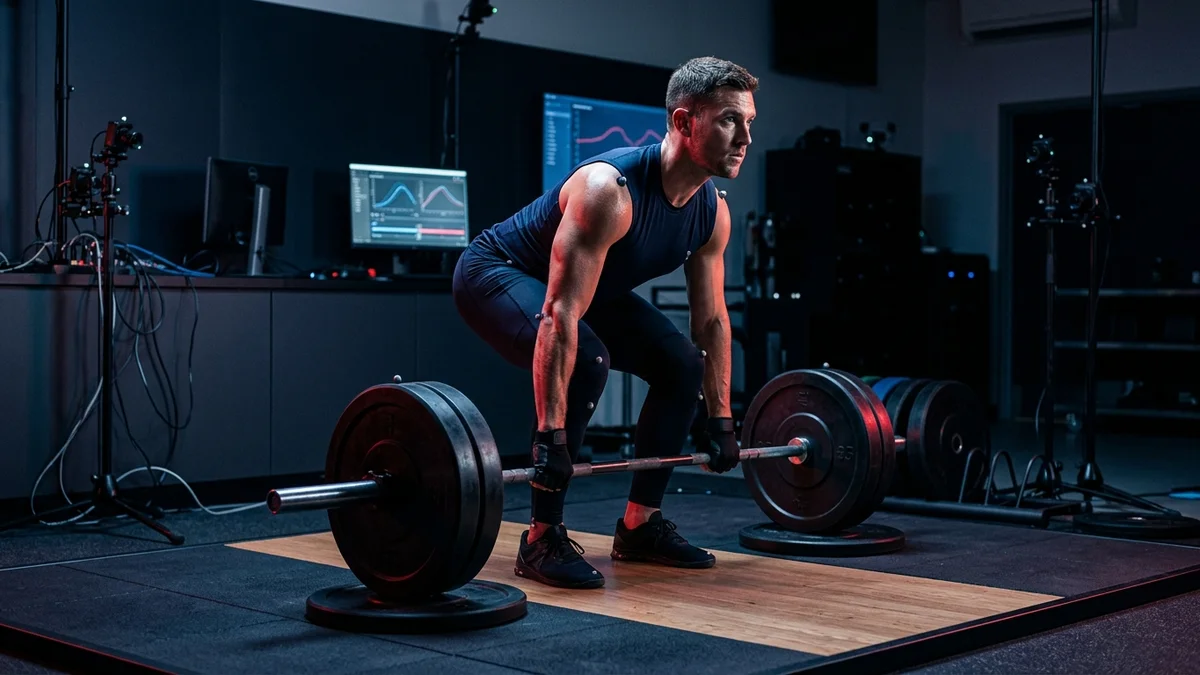
Hip Hinge Biomechanics & Deadlift Form
Moment arms, McGill lumbar shear tolerance, 3-point dowel rod progression, and preventing spinal flexion under heavy deadlifts.

The Leucine Trigger & Muscle Protein Synthesis
Intracellular Sestrin2 sensing, the 3.0g leucine threshold, muscle-full refractory kinetics, and per-meal protein distribution.

The Science of Body Recomposition: Build Muscle & Lose Fat
P-ratio models, the Barakat et al. 2020 meta-analysis, calorie cycling, and clinical protocols for simultaneous fat loss and muscle gain.

VO2 Max & Mitochondrial Longevity: Norwegian 4x4 Protocol
The Mandsager 2018 122,000-patient mortality analysis, Fick equation kinetics, PGC-1alpha biogenesis, and interval execution.

The 8 Dimensions of Progressive Overload Beyond Adding Weight
Overcoming the linear weight trap: tempo, range of motion, mechanical disadvantage, training density, and technical mastery.

Sleep Architecture & Muscle Hypertrophy: Slow-Wave Sleep
How Stage N3 delta sleep triggers 70%+ of daily growth hormone, how sleep debt burns muscle, and clinical sleep hygiene blueprints.

Electrolytes & Fluid Physiology: Clinical Sodium & Hydration
Sodium-potassium pump mechanics, sweat rate calculation, plasma volume preservation, and debunking muscle cramping myths.

The Science of Muscle Hypertrophy: Mechanical Tension & mTORC1
Mechanotransduction, Henneman's size principle, volume landmarks (MEV/MRV), and the truth about muscle damage.

Zone 2 Cardio: The Mitochondrial Health & Longevity Blueprint
Lactate dynamics under 2.0 mmol/L, PGC-1alpha activation, fat oxidation kinetics, and weekly time allocations.

Optimal Daily Protein Intake for Athletes: Clinical ISSN Targets
The 0.8 to 1.2 g/lb evidence consensus, leucine threshold (3g), protein distribution timing, and kidney safety facts.
Creatine Monohydrate: Dosage, Saturation, Timing & Safety
ATP regeneration mechanics, 5g daily saturation protocols, cognitive resilience, and debunking hair loss myths.

Periodization Models: Linear vs Undulating vs Block
Comparing Western linear periodization, DUP (Daily Undulating), and Block periodization for strength and hypertrophy.